
Fracture recovery: what biomarkers tell us long before the bone appears healed
BY DR CHELSEA S BAHNEY AND DR ZACHARY M WORKING

The bone looks well aligned, the hardware is solid, but significant uncertainty persists after every surgical fracture fixation deemed technically successful: there is no reliable way to know whether the bone is truly healing. Patients and clinicians regularly have to wait for months, making critical decisions about weight-bearing, rehabilitation, or re-intervention merely on the basis of experience, intuition and decades-old standards. This uncertainty directly affects recovery timelines, complication rates, and patient confidence. Our research suggests that a novel biomarker could enable clinicians to measure bone healing biology much earlier in the future—and meaningfully change patient care.
When it comes to the clinical treatment of broken bones, the orthopedic discipline has seen countless advances in recent decades in areas such as fixation and imaging. However, when it comes to tracking and assessing the healing process as it takes place, there remains a clinical gap that all orthopedic surgeons are keenly aware of: we have no quantitative system to reliably measure in a timely fashion how well a broken bone is mending after treatment. Instead, we largely rely on radiographic measurement tools, which are qualitative in nature—surgeons essentially look at x-ray images after an operation to try and determine how much bone callus has formed across the fracture gap.
-
Read the quick summary:
- Dr Chelsea Bahney and Dr Zachary Working describe how the CXM biomarker enables earlier, more precise monitoring of bone healing, surpassing the limitations of radiographs.
- CXM levels reveal fracture healing biology long before bone appears healed, helping surgeons tailor rehab and intervene sooner in cases at risk for non-union.
- Surgeons benefit from personalized fracture care, improved decision-making, and potential for home-based patient monitoring using finger-prick blood tests.
- Ongoing discussion explores how biomarkers can transform clinical protocols, optimize rehabilitation, and accelerate orthopedic research.
Disclaimer: The article represents the opinion of individual authors exclusively and not necessarily the opinion of AO or its clinical specialties.
The blind spot in fracture care
The problem is that bone heals very slowly, and the deposition of the mineralized tissue that eventually makes up the bone takes place towards the very end of the process. However, the x-ray can only visualize the finished bone, but not its formation. In practical terms, this means that in a patient with, for instance, a tibia fracture that does not heal as expected—as happens in around one in ten cases—we will not be able to identify the problem, much less confidently act on it, until six to nine months after surgery.
There have been various attempts over the years to establish objective methods to better quantify bone healing with the help of tools that translate radiographic images into numbers. For long bones like the tibia, femur, and humerus, perhaps the most noteworthy among these is the modified Radiographic Union Scale for Tibia fractures (mRUST) scoring system. While mRUST has standardized the way we score radiographs, it also requires x-ray images and is therefore not able to speed up the process of assessing the healing process. To put it simply, fracture healing is still judged largely visually, generally qualitatively, and mostly very late.
Our study really was an attempt at answering one central question: what if we had a quantitative method to measure fracture healing and meaningfully move up the time by which we are able to reliably assess it—and basically waste much less time wondering?
Spotlight on the biology
In focusing on Collagen X biomarker (CXM) we decided to look not at the bone itself, but at the biology that leads to bone formation. We developed a testing method involving an antibody that indicates the presence of CXM—a degradation product of the process of cartilage turning into bone—in small amounts of blood. What we ended up with is a measurable indicator for precisely the stage of the bone healing process that occurs too early for radiography to pick up on. CXM levels begin to rise as the healing process begins and keep increasing for a while before peaking. As more cartilage turns into bone, the levels fall again. Simply put, we think the higher and earlier a patient’s CXM levels peak, the faster their healing progress and the better their prognosis.
What is so special about CXM is the fact that it is not expressed in adults with normal bone turnover. It only shows up during embryonic development, in growing children with open growth plates, and during fracture healing. It is not present in the bloodstream during other cartilage-based processes that we can tell at this time, and particularly not in the development of osteoarthritis. In adults with intact bones, CXM is therefore very unique to the fracture healing process.
Earlier insights for surgeons and patients
There are very tangible potential applications: for example, when patients with long bone fractures do not heal as expected, a clinical decision will eventually have to be made on whether to wait any longer. In some cases, the healing process takes more time than in others—things just move along a little slower, but they will eventually come to completion. Being able to draw meaningful conclusions from a patient’s CXM levels at regular intervals along the way will potentially allow us to pick up much earlier than before on cases where no progress is occurring at all and where the patient’s ability to gain something from a further investment of time is therefore very low. In particular, we hope this can become useful early on when clinicians may have a gestalt that healing is not progressing but do not have the confidence to act without additional information.
Potent decision support
There are also patients who ultimately develop non-unions—bones that never fully come to connection. The diagnosis is very impactful: studies show that the diagnosis of a non-union affects health-related quality of life (HR-QoL) scores more negatively than congestive heart failure or heart attacks. Patients will have to undergo surgery, and we are talking about big and consequential surgeries with first-pass success rates around 85 percent. That is already far from a slam dunk, but success rates for follow-up procedures are even lower. After all, getting the bone to wake back up is challenging.
Of course, CXM monitoring is not a cure, and having it available will not change the fact that patients who develop non-unions will ultimately end up needing surgery. However, it could be a very potent decision-support tool that could inform the time to act as well as the strategies to get a bone to heal. Perhaps it will provide our only insight into whether surgeries to promote union are ultimately biologically successful. Currently, the clinical management of non-unions is heavily dependent on a surgeon’s professional experience, intuition, as well as their ability to recognize patterns. As a skill set, it may be comparable to what you acquire when you go to art history school: you attend classes for a very long time, and you ultimately gain access to a select group of specialists. You develop a certain way in which you view and judge pictures and photographs, you learn a certain way of speaking, and it is all incredibly nuanced. Using the CXM biomarker as a quantitative assessment of long-bone healing has the potential to take the art of treating bones that do not heal out of this very specialized and nuanced realm and transport it into a data-supported age.
Rethinking rehab with customized protocols
CXM could also be a great addition to radiography in terms of post-operative protocols because it could allow us to make much more informed decisions. X-ray tells us a lot about how well aligned the bone is, whether the fragments are in the right place, or how well the orthopedic hardware—plates or screws applied during surgery to realign the damaged bone—are staying where they are meant to. CXM levels tell us about the biology: can we allow a patient to walk sooner than we would have felt comfortable otherwise? We never would have known the answer, but now we have something to watch it with.
Frequent measurements of CXM levels could also help us individualize the timing of each patient’s rehabilitation process and, for instance, customize weight-bearing protocols by answering another central question: does loading the bone stimulate a healing response? Broken bones will not heal properly if they do not bear loads at a certain point. But it has to be just the right amount at just the right time—bearing too much weight too early can also be detrimental. However, for a surgeon who only sees their patient once every few months during rehab without the option to find out anything about their biology, it is little more than guesswork: could the patient walk ten times as much as they do? Could they maybe even run already? Essentially, any decision we make on whether a patient is able to bear weight after surgery is based on personal experience as well as on professional standards, some of which go back three or four decades. And we all know, that medical practitioners, as a general rule, tend to shy away from deviating from established norms.
Ankle fractures are a good example: the established norm dictates that patients with a broken ankle do not put any weight on it in the first six weeks after surgery. The worry is that it could break again, or that the orthopedic hardware will fail, and the bone will lose the shape that was obtained during surgery. Of course, there are real consequences of not using a limb for a prolonged time: the patient’s muscles will atrophy, and not just in the foot itself, but also their leg and thigh muscles. Their balance and proprioception will also decay noticeably.
In any case, most patients will be allowed to start bearing some weight after six weeks, still with the support of crutches at first. The amount of weight will then be progressively increased. And while there are many different protocols for this phase, there is no real agreement. Some practitioners tell their patients to walk right away. Others advise them to take it easy for another month and slowly wean themselves into it. Yet others recommend three months. The bone meanwhile may be healing just fine—but no one can really put a finger on it. We simply are unable to determine with any authority that the ankle is actually in much better shape than we may think and that more weight could be put upon it much earlier.
Dispelling old myths
We also established in our research that we only require very small amounts of blood to reliably measure a person’s CXM levels. This means that we do not have to perform a professional blood draw from the arm every time we want to take a measurement. A finger prick, which most people do not really mind, and which they can conceivably even perform themselves in their own home, is sufficient. This could be a game-changer for the long-term monitoring of how well a patient heals. It could also open the door to much more tailor-made treatment approaches.
For instance, if we could develop a system where patients take a measuring kit home, we could possibly replace some of the post-surgery check-ups at their doctor’s office, which can get really tiring for some patients. At the same time, we know that people are keen to find out all kinds of things about their health nowadays—we all wear smart watches to know how well we slept and how many steps we took. Generating more data points on a patient’s bone healing to support the rehabilitation process could tie in neatly with that trend.
Also, by measuring for the biomarker at regular intervals during the rehabilitation process we could really optimize individual patients’ recoveries, for instance by better pinpointing the ideal time for them to start putting force on the affected limb. It would be great if we could finally dispel some of the myths about how recovering bones are very fragile—especially because the orthopedic hardware is so good these days that it will take most or all of the mechanical load. The additional data that can be generated through regular CXM measurements could be potentially practice changing in many areas around post-surgery fracture care.
Diabetes, smoking, inflammation: a filter for other biological risks
While orthopedic researchers have investigated biomarkers in the past, they mostly focused on biomarkers of bone turnover that have been used to understand osteoporosis progression. However, as a byproduct of normal bone homeostasis, these markers are present everywhere in the body all the time. In addition, bone turnover is very dependent on factors like age and sex. The same applies to inflammation markers, which have also been investigated in the past. That is part of the reason that none of these biomarkers have worked in fracture healing: ultimately, they require huge databases of additional patient information in order to normalize for factors such as age and sex.
CXM levels on the other hand do not vary greatly by age or sex. This allows us to significantly reduce normalization, a process that can be very complicated. If CXM was indeed dependent on age and sex, we would have to figure out what kind of person we were looking at in each case, and adjust for sex, age and other factors. Basically, it saves us a lot of math.
In addition, a more precise understanding of the biology of bone healing will also allow us to better understand the role of other factors that may impede somebody’s progress. Patients nowadays tend to have more problems with the biology of their healing due to things like smoking, diabetes, or obesity. But we do not yet understand their impact very well—for instance, why does someone with diabetes not heal as well? These are questions of biology, and the biomarker is going to be a game changer in terms of understand how bone healing is impacted by these diseases. We will be able to track the healing process of the bone much more precisely, as well as link it to other things such as somebody’s inflammatory state. If you look at x-ray images of a person with diabetes and a person without diabetes, you cannot tell the difference between them, even though the diabetic has many other problems. Now, we can map those much more closely and connect them to the biology of their bone healing.
CXM as an enabler for new research
Aside from individual patient care, we also believe that our research could have a role to play in science, and specifically in the development of biologic therapies for long bone fractures. What if we could come up with medications to be administered to a poorly healing bone that could modulate the biological healing process and accelerate fracture healing? None of the therapies that have so far been developed in this regard have shown great evidence—but that does not necessarily mean that they are no good. The real reason could be a lack in appropriate outcome measures: if there simply is no reliable quantitative method to tell if option A really differs from option B in terms of biological response, then this may well be part of the reason new therapies have not taken off. The result is that surgeons currently have nothing to give to their patients that could accelerate the biology.
Not only could CXM monitoring become a standard tool to supply reliable data to individual physicians to help them make decisions. We also think that it could hugely improve our ability to assess the efficacy of new treatment approaches in fracture healing. It would be a game changer for researchers and scientists around the world who lead clinical trials in this field.
Collaboration as a catalyst
Often, scientific advances will require coincidence and sheer luck as much as anything to take shape. Somebody somewhere will figure something out, while somebody else in another part of the world realizes something adjacent. Eventually, these two people might meet and, during a casual chat, they might realize that there are parallels or even similarities between their fields of interest.
Something similar happened in our case: there was an interest in cartilage research for reasons to do with developmental issues in children. And it took a fracture biologist and chemical engineer like Chelsea to realize that cartilage plays a significant role in fracture healing and that there may be an application there. At the same time, Zach is somewhat of an outlier surgeon in that he was an engineer before taking up medicine. We discovered during Zach’s fellowship that we speak much of the same language and share an interest in fracture biology. It allows us to discuss problems in a way that is neither strictly surgery nor strictly engineering. This same approach has also very much informed how we have reached out to other groups.
Some of the very first funding for this research came from AO North America Trauma. The AO Foundation, which we have both been involved in for a long time, is an organization that has really set the model for cross-disciplinary collaborations between physicians and reserachers. We believe that this is how science works best: it progresses by leaps and bounds when people are able to share ideas. We can make so much more progress when we work together.
About the authors:
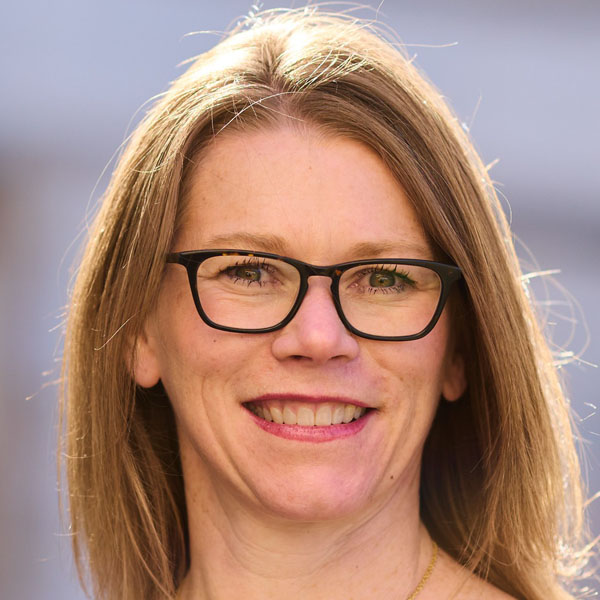
Dr Chelsea Bahney is an Associate Professor at the University of California San Francisco (UCSF) in Orthopaedic Surgery with a core faculty appointment in Bioengineering. The Bahney Regenerative Therapeutics Laboratory, is committed to developing innovative treatments and diagnostic tools that make a tangible difference in human health, with a primary focus on fracture repair. The research is rooted in the complex mechanisms behind normal tissue development and regeneration, providing the mechanistic insights needed to address some of healthcare’s most pressing challenges. The laboratory's impact includes ~80 peer-reviewed publications (h-index of 31, i10-index of 53), consistent extramural funding, and 20 patents/applications.
Dr Bahney's leadership spans multiple national and international organizations: former Chair of the ORS International Section of Fracture Repair (2019-2023), Global Treasurer for Tissue Engineering and Regenerative Medicine International Society (TERMIS, 2019-2024), and member of the AO Foundation's Craniomaxillofacial R&D Commission (2020-2025). She currently serves as Secretary for International Combined Orthopaedic Societies (ICORS) and on the OTA Strategic Research Initiative Committee (2020-2026).
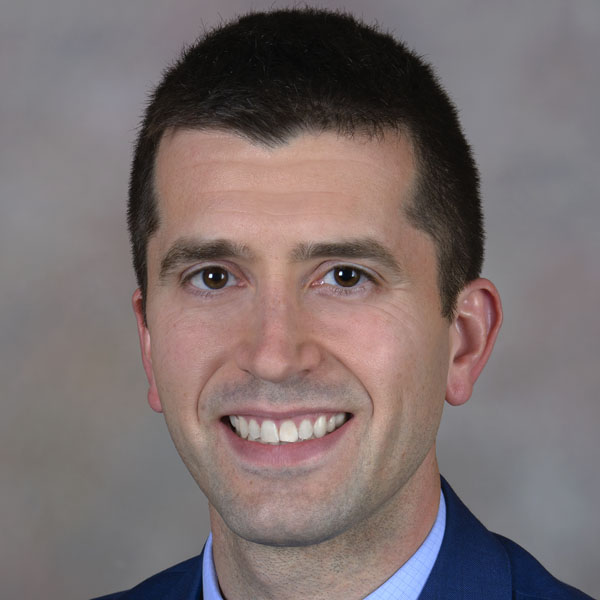
Dr Zachary Working is the Director of Orthopaedic Trauma and specializes in complex fracture care at Oregon Health & Science University in Portland, OR, focusing on care of complex periarticular fractures, pelvis and acetabular injuries, nonunions, and musculoskeletal infections.
Dr Working holds a joint appointment in the Department of Orthopaedics & Rehabilitation and the Department of Biomedical Engineering. As a surgeon scientist he works closely with Dr Chelsea Bahney from UCSF to understand mechanisms of fracture healing as they have partnered for the last decade to help validate a potential serum biomarker to track the progress of fracture healing. Dr Working guides additional research platforms focused on the long term consequences of anemia on patients receiving fracture care, muscle injury in Orthopaedic Trauma, and the effects of sleep patterns in Orthopaedic Trauma surgeons.
He serves as the current chair of the Basic Science Committee within the OTA and serves on the AO Research Committee. He is an active member in the Orthopaedic Trauma Association, in AO Trauma, and the Orthopaedic Research Society. Dr Working and his wife are proud to be from the Pacific Northwest and raise their two rambunctious kids in Oregon.
You might also be interested in...

AO PEER
AO PEER is a knowledge platform especially designed for health care professionals who want to learn and improve their clinical research skills.
Research grants
The AO provides a range of grant funding opportunities to support researchers both internationally and in targeted regions.

Basic Principles
The basic course for doctors in surgical training, and doctors interested in furthering their knowledge and skills in operative fracture management.
Advanced Principles
The advanced principles course concentrates on operative fracture management in more complex injuries, and takes surgeons to the next level.