Call for manuscripts: Overall Treatments in Temporomandibular Joint Pathologies

Temporomandibular dysfunction represents a significant challenge for various specialties, demanding an understanding that goes beyond the articular and muscular structure to encompass psychosocial, neural and systemic factors. Craniomaxillofacial Trauma & Reconstruction (CMTR) Journal's forthcoming Special Issue: Overall Treatments in Temporomandibular Joint (TMJ) Pathologies—will focus on the latest clinical innovations, guidelines and decision algorithms, technological developments in the diagnosis, management, and surgical treatment in the temporomandibular joint.
Take the opportunity to contribute with original research, clinical studies, or reviews that showcase emerging diagnostic tools, intraoperative imaging systems, surgical techniques, and fixation methods that are redefining the care of complex facial injuries. This issue aims to feature the forefront of clinical practice and translational research driving improved outcomes in facial trauma surgery.
CMTR’s special issue is now open for submission
Submission deadline: December 31, 2026.
We welcome submissions across a broad spectrum of topics, including:
- New guidelines and decision algorithms for the diagnosis and non-surgical management of TMD, including advances in physical and pharmacological therapies.
- Innovative surgical techniques in the TMJ, such as infiltrations, arthroscopy, minimally invasive surgeries and complex joint reconstructions.
- New guidelines for the reconstruction of the congenitally missing, diseased or ankylosed TMJ, guiding clinicians in using autogenous and/or alloplastic materials.
- The integration of modern technologies like computer-assisted planning, intra-operative navigation and other new imaging methods.
- The development of tissue engineering for repairing and/or replacing diseased joint components, specifically the mandibular condyle and TMJ disc.
- Research focused on the etiology, prognosis and risk factors for the chronification of orofacial pain.
Editors of CMTR Special Issue: Overall Treatments in Temporomandibular Joint Pathologies
Read more and submit your manuscript
Submission deadline: December 31, 2026.
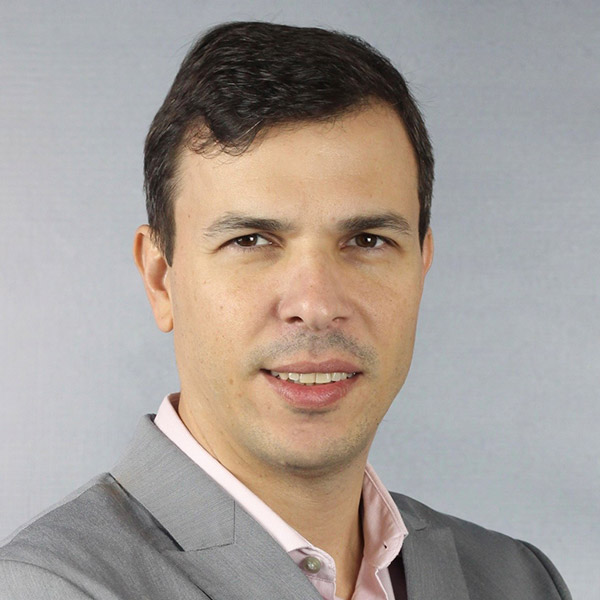
Dr. Rafael Cypriano

Prof. Dr. Andreas L. I. Thor

Prof. Dr. Eppo Wolvius

Prof. Dr. Dongmei He
- Your research paper is open access and globally accessible.
- Fast publication timelines supported by MDPI’s streamlined review process.
- High visibility through promotion by AO CMF and CMTR.
- Be part of a renowned network of global CMF experts.
- Improved discoverability of your paper: thematic focus of special issue improves discoverability within a broad-scope journal.
- Articles in special issues are more likely to be read, shared, and cited.
- Expansion of research network: Special Issues facilitate connections among authors, fostering scientific collaborations.
- Have your article indexed in PubMed, Web of Science, and Google Scholar
- Benefit from highly attractive Article Processing Fees (APC’s) for members and non-members. To have the member APC applied, either the first or last author must be an AO CMF member for a minimum three months prior to article submission:
| CMTR journal article processing charges (APCs) | Average APC (other journals) | ||
| AO CMF member | CHF 900 | CHF 2,000 | |
| AO CMF members Low-income countries | CHF 650 | ||
| Non-member | CHF 1,500 | ||
| Editorial board selected “high-impact” publications, limited availability | Full waiver (CHF 0) |
We look forward to receiving your contribution and to advancing excellence in CMF reconstruction—together.
CMTR Editorial Team
Mike YY Leung
HKU Faculty of Dentistry, Hong Kong
Editor-in-Chief

Kathleen Fan
Kings College Hospital, London
Editor-in-Chief
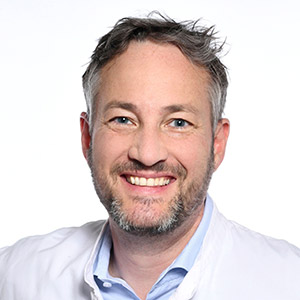
Florian M. Thieringer
University Hospital Basel, Switzerland
Editor-in-Chief
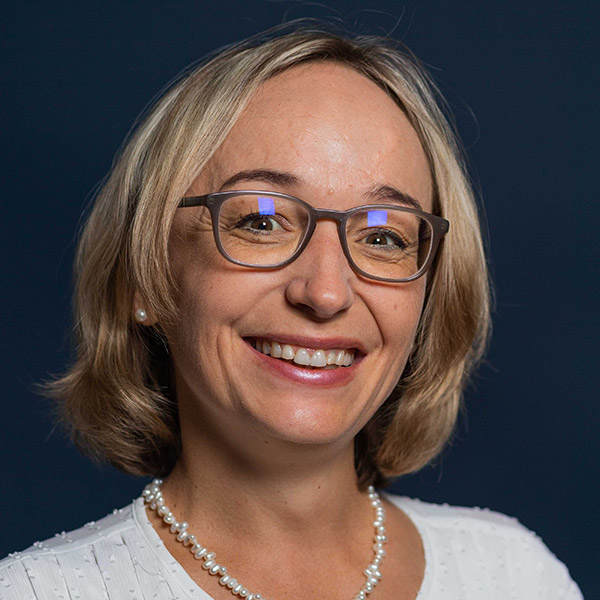
Mirjam Bucher
AO CMF International, Switzerland
Managing Editor
You might also be interested in...
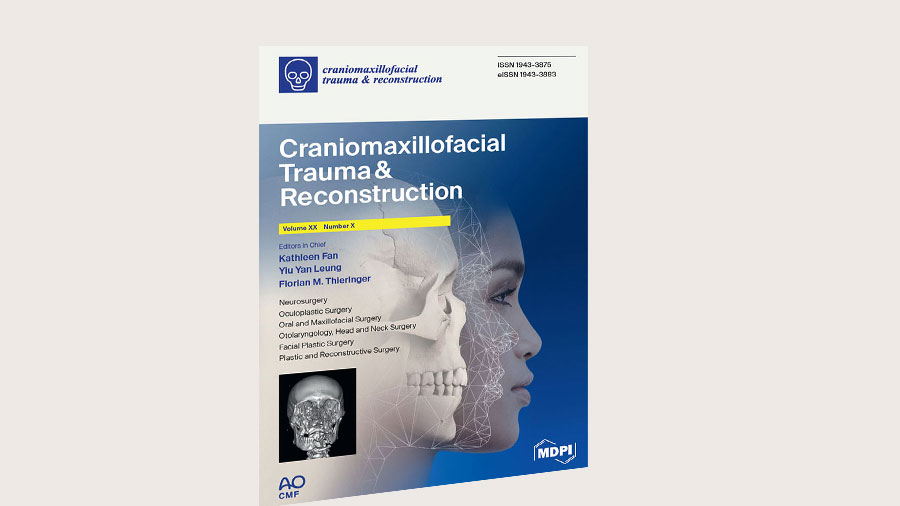
CMTR’s latest articles
Catch up with the latest research in CMF surgery with the open access journal
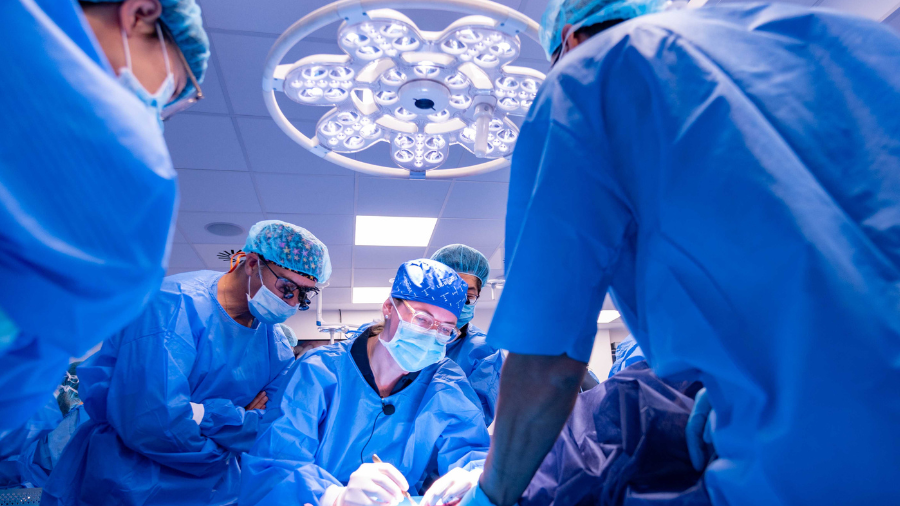
AO CMF Course—TMJ Surgery
Master TMJ surgery with hands-on learning from AO CMF's top faculty